A Golden Cage is Still a Cage

The local government has adopted a “zero tolerance” policy regarding the COVID-19 pandemic. They’re convinced that their approach to controlling the spread of the virus has been proven correct. They point to the very low numbers of infections in China. They consider that to validate their strict social control measures. In contrast, they point to what they consider to be an out-of-control situation in the West.
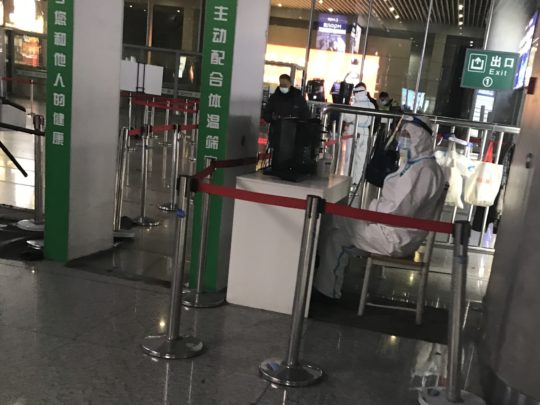
It’s impossible to ignore the wide difference in transmission numbers that result from China’s approach. There is no doubt that China is controlling the spread of the virus much more successfully than other countries are.

Everything comes at a cost, of course, and China’s success in controlling the pandemic is no exception. The cost is borne by the local people. They have to deal with limitations and restrictions that disrupt their lives, in little and not-so-little ways.

A coworker told me yesterday that the city has cancelled all large, in-person events through the end of the year. All concerts, parties, exhibitions, graduation ceremonies, celebrations, have been moved to online and virtual formats. Many schools are back to holding classes online, too.

Travel has also taken a hit. When people travel, the virus travels, too. We’ve had to cancel many official trips within the country. We can take personal trips, but there’s a huge risk. If you travel outside the city, and an outbreak is discovered (“outbreak” in China means the number of confirmed cases is more than zero), the place where you are traveling to could be locked down. Your long weekend trip could be extended by 14 days, locked inside a crummy quarantine hotel. Which you have to pay for.

Although we really wanted to do more in-country travel, the risks are too high. We aren’t worried about getting sick: we’re triple-vaccinated. But in China, when an area gets locked down, no one gets in or out, regardless of vaccination status, nationality, or color of your passport. The danger of getting sick is pretty small, but the risk of massive inconvenience and disruption to our lives is quite high.

Luckily for us, we’re in Shanghai, where there’s a lot to do, see, eat, hear, experience. There is no danger of getting bored in Shanghai. The staycations that we are planning are pretty great. But the psychological effect of knowing that we have to stay in the city deducts some of the fun. Although it isn’t a bad thing, we’re stuck here.

I have to try a new approach

It was 11:10 pm. I was worn out. I had been “on” for more than 2 1/2 hours. I felt drained. They say that the language test isn’t supposed to feel fun. In fact, you’re supposed to feel stressed. The examiners are supposed to push you. They did their job. My brain was as tired as my body.

My language score had expired ten days before I got to post. No valid language score means no language incentive pay, which is a difference of hundreds of dollars a month. Testing again to re-establish language proficiency isn’t just a matter of personal pride, there’s a financial incentive as well.

When you’re in DC for training, you can test at the testing center in the Foreign Service Institute. The tester and examiner are both in the room with you, you can interact with them naturally during the test, it’s more like a real interaction. When you test from post, you have to do it via Digital Video Conferencing. That used to be a significant thing back in the pre-plague years. It used to feel strange having a meeting over videoconference. Now, of course, we’re all used to interacting on Zoom, WebEx, Teams, Skype, FaceTime, etc.

At 7:30 am Monday morning Washington, D.C. time, I signed in to WebEx for my language test. That’s 8:30 pm China time. After a full day of work. The test finished after 11:00 pm.

This was my fifth Foreign Service language test, and the second time testing remotely from post. It was also my third Chinese language test. I tested in Vietnamese after my language training was done and I was ready to go to post. Then I tried again after almost two years of in-country work, during which time I studied with a private tutor four hours a week. Both times, I hit a wall. I improved, but not enough.

I’m clearly doing something wrong. I’m not making the progress that I want to. The last two times I tested in Chinese, I “only” got to a 3+/3+. This was the same score that I got in 2016, after two years in China. I put “only” in quotes, because a 3+/3+ is objectively a good score. I know many people who struggle to get to a 3/3. The “+” after the number means that my performance was somewhere between a 3 and a 4. The testers witnessed me wandering into the range of a 4 at times, but not consistently. So for me, the 4 isn’t an impossible goal. But exactly what am I doing wrong?

As someone who’s been a speaker of Chinese for 30+ years, and who’s put in a lot of hours of study, I was really hoping to break through to a 4. The highest score is a 5, which equates to the language ability of a college-educated native speaker. The folks in the Foreign Service Institute call that a “unicorn,” almost no one ever gets to a 5 in a language that isn’t their native tongue. But I know people who have achieved a 4 in Chinese. Why can’t I?

I have such mixed feelings about this. On the one hand, the external validation of getting to a 4 isn’t my main goal. They say that you are only really competing with yourself. As long as you can look back and see that your current performance is better than your past performance, you’re doing well. From that point of view, I’m making progress. I feel that my Chinese is getting better and better. But the external validation isn’t nothing, either.

One of my friends, a native speaker of Chinese, tested in Chinese (I’m still not sure why she did it, but whatever), and tested at the same level that I did. If my score is the same as that of a native speaker, then clearly what’s wrong isn’t my raw language ability. It must be my test-taking strategy.

Time to take stock, and re-examine how I’m preparing for the test. This isn’t over. I can test every six months. I still have more than 19 months left in this tour. There are still three more shots at the brass ring. And I’m going to take every single one of those opportunities to show myself that I can do it.